Panel acts to protect 12 historic sites

Prized-property-could-be-oasis.jpg

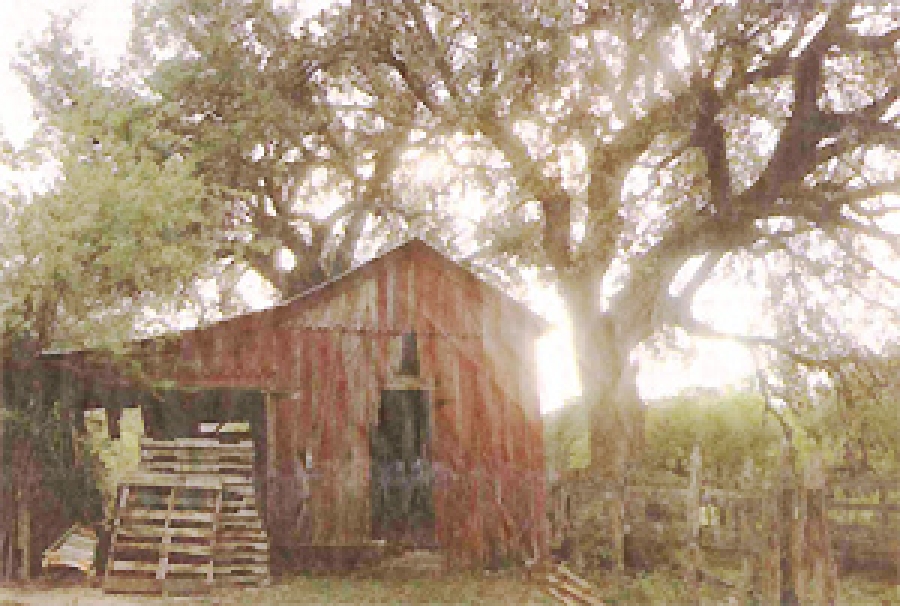
Conservation to be weighed by City Council this summer. A city panel has gone forward with plans to protect a dozen historic structures dating as far back as the late 1700s, including a house built by an early Texas settler a few years after the battle of the Alamo.

A city panel has gone forward with plans to protect a dozen historic structures dating as far back as the late 1700s, including a house built by an early Texas settler a few years after the battle of the Alamo.

Wednesday's action by the Historic and Design Review Commission marked a milestone in a five-year effort to protect historic houses, barns and other structures, and at least one cemetery, in parts of San Antonio that once were used as farmland. By coincidence, it came as the commission said goodbye to the city's longtime historic preservation officer.

The San Antonio Conservation Society which provided $42,000 and received a $10,000 national grant to help prepare an inventory of historic farm and ranch properties throughout Bexar County applauded the move, which is set for City Council consideration in August.

"At a time when historic farm and ranch complexes are threatened by urban sprawl as the county undergoes urbanization and highway construction, these properties need to be designated as local city of San Antonio landmarks," said Paula Piper, a former Conservation Society president, as she read a statement from the group.

Kay Hindes, senior planner with the city said the "finding of historic significance" by the city, if approved, will put those properties under landmark status, protecting them from demolition, and will help the owners qualify for preservation grants and tax exemptions.

Patrice Villastrigo owns a site on the North Side that includes a stone building, known as the William H. Jackson House, that predates the Civil War. She said she didn't know all of the history the city has learned about the property, which was used as a stagecoach stop, but appreciates knowing it will be protected at a time when much of the city has been paved with concrete.

"I think this is a fabulous project," Villastrigo told the commission.

Another site among the 12 up for historic designation is a house on the South Side, built by Texas pioneer Asa Mitchell around 1840. Mitchell, one of Stephen F. Austin's "Old 300" settlers, fought in the 1836 Battle of San Jacinto, where the state won independence from Mexico after the Alamo fell.

Action on five other sites was delayed for the commission's next meeting on June 18. Hindes said some owners wanted more time to study the designation. A few might want the city to reduce the area of land surrounding a structure to be deemed historic, she said.

In other business Wednesday, the commission postponed action on a proposal to demolish the Hedrick Building, a 10-story structure downtown at Martin and St. Mary’s streets that opened in 1928. The city staff has recommended the commission deny a demolition request and approve a historic designation for the building, which is owned by RBRA Inc.

The meeting closed with an emotional farewell from commissioners and staff to Ann McGlone, the historic preservation officer since 1993. McGlone, whose last day with the city is Friday, will be the community development director in Alamo Heights, where she'll coordinate development of a comprehensive plan for the suburban community. Hindes will assume the role of preservation officer as the city conducts a search for a permanent replacement.

McGlone recalled fighting demolition of the old, abandoned $3 Motel on Fredericksburg Road in the mid-to-late 1990s. Though many residents wanted it razed, Councilman Roger Flores saw its historic value as a former motor court of the 1920s, when the automobile age was in its infancy.

The motel later was leveled, and replaced by an auto parts store and other commercial businesses. But McGlone remembered how Flores, who died in 2004 courageously argued to preserve it, saying communities often regret destroying a building, but never regret saving one.

"I wish more council people had the strength to say that, because I really think that's true," McGlone said.

This Man, This Land

Phil Hardberger Park's caretaker, Dale Chumbley, hopes to stay long after it opens to public.

For $100 a month in rent, Dale Chumbley lives on 100 acres in the middle of the suburban sprawl on San Antonio's North Side. As dusk approaches, he likes to sit on his back porch to watch his cattle and see the deer silently pass along the fence line to sip from the water trough.

"They could offer me a house in the Dominion paid for and I would choose to stay here," he said.

Chumbley, 56, is the caretaker of Phil Hardberger Park. His goal is to stay on the property as long as he can, and he has a lease till 2010. But how many years he has left on the property will depend on the politics of the City Council and the future funding for the development of the park.

"My wish is they find me back there dead some day," he said pointing toward the woods of oak and mesquite where he and his grandson like to follow the deer trails.

Purchased by the city for $50 million, Phil Hardberger Park is slated to open to the public in January with some trails and a new parking lot Chumbley knows the opening will mean he can no longer step outside in his underwear, but the city will still need him to take care of the original Voelcker homestead.

The master plan for the park calls for a massive bridge to be built over Wurzbach Parkway to connect the 100 acres that Chumbley looks after with the 200 acres the city purchased on the other side. The vision includes restored meadows and an interpretive center where schoolchildren can see cows on a 19th-century dairy farm.

That farm is currently Chumbley's home. And there is no money earmarked for the project, as the majority of park developments do not have funding. Whenever the consultants the city hired to come up with the plan visit the farm, Chumbley always asks them to just cut to the chase and tell him if he can stay.

"I'm very lucky," he said. "I've worked on a lot of fences here."

Chumbley can trace his roots back six generations in San Antonio and has spent his adult life managing cattle. He started working at the Union Stock Yards in San Antonio at 19 and stayed there until it closed in 2001.

Cattle that owner Minnie Voelcker kept on the property needed to be moved and did not want to climb into the back of a trailer. Chumbley simply cut the stock off water for a night and then led them into the pen the next morning. It is a standard trick, but the bankers were impressed.

Even though Voelcker had millions from selling a portion of the property, she chose to stay on the land and keep it close to what it was like when she moved to it as a 19-year-old bride.

Chumbley sees his goal as carrying out her legacy.

"You don't see people like that anymore," said Banks Smith, the lawyer for Minnie Voelcker and later her estate. "I would trust Dale with my life."

He has been the man the bank turned to when something on the property needed to be done.

"That's all I know," he said. "When that is all you know how to do, you're kind of stuck."

He has replaced or repaired the fences. He has chased out vandals and kept peace with the neighbors.

But Chumbley is not alone in his love of the property. After he gave Mayor Phil Hardberger a tour of the land, the mayor handed him a card and told him if he ever needs anything to give his office a call. On that tour, Chumbley bonded with the mayor.

But even with the direct line to the mayor's office. Chumbley still prefers to solve problems on the property himself. He said it would break his heart if he had to leave. He wants to see the property kept as it is so his grandson can show his grandchildren the trees the two of them planted together and then go explore the woods.

Though he's usually a calm man, his face turns red and he starts to swear when he thinks of people carving their initials into one of the trees or letting their dogs off their leashes and chasing his cattle. Then he looks over the field and hears the grackles cawing.

Phil Hardberger Park becoming reality

City Council approves master plan and funds for first phase of design. Phil Hardberger Park already looks like the land suburban development forgot. Now it should remain that way a wooded oasis bisected by busy streets and surrounded by neighborhoods.

The City Council on Thursday approved a master plan for the 311-acre area, along with $852,907 for the first phase of the park's design.

The former dairy farm of Max and Minnie Voelcker is considered the most valuable land in San Antonio that is not going to developers. And in many ways, the design responds to San Antonio's recent suburban sprawl and 10 of tree canopy.

"It's counter to what we've long expected from the North Side," said Char Miller, urban studies professor at Trinity University. "It allows us to maintain a breathing space for the land itself but also for us."

Phil Hardberger Park is the first San Antonio park with a master plan. It’s also believed to be one of the few new large urban parks in America carved out of the center of a city instead of its fringe.

“It’s a precious parcel up there amongst all the development," said Julie Bargmann of D.I.R.T. Studio, one of the firms that designed the master plan.

With an emphasis on urban ecology and habitat restoration, Phil Hardberger Park will be different than others in San Antonio's park inventory.

Although there should be plenty of areas for picnicking and pickup ball games. The idea is to create a place to learn about how nature and urban residents can coexist.

"The whole challenge in urban life today is how we can live with nature without utterly destroying it. Striking that balance is very important for San Antonio," Mayor Phil Hardberger said. ''A lot of our land has been overgrazed and overused. In an urban environment, it's just been scraped off. The goal here is (to achieve) an ecological balance.

The master plan's broad brush concept would give 25 percent of the land to learning centers and pockets of playgrounds, picnic areas and playing fields. A portion of the Voelcker homestead might be transformed into an area where kids could see a few cows and learn about how an early 1900s dairy farm operated.

And the park would introduce San Antonio to something the landscape architects call a "parking grove." Think of it as a parking lot with an abundance of shade tree and a surface that allows water to permeate. Bus stops would play a key role in the plan to get people to the park without driving.

But 75 percent of the property would go to landscape preservation and restoration of Texas brushland, cedar elm woodland, oak woodland, meadow and an oak savanna.

The oak savanna, in particular, would represent the restoration of a habitat once prevalent but now rare in Texas. The savanna – a mixture of prairie and scattered trees – once supported herds of bison. Later, it provided settlers with rangeland.

Today, just 1 percent of an estimated 20 million acres of Texas tallgrass prairie remains, said Bargmann, and bird and wildlife species that threatened and declining. Planting native grasses could provide a habitat for them.

The red-tailed hawk, bob-white quail, lark sparrow, field sparrow, lark bunting, Mexican eagle and Eastern screech owl are a handful of the bird species that might benefit, according to a wildlife survey.

Several loop trails would let visitors meander through the various habitats on bike or by foot, while some ruler-straight paths would move people between loops or across the park in the fastest way possible.

San Antonio's mission history would be reflected in a plan to use acequias – irrigation canals used around the missions – to capture, filter and reuse rainfall and the runoff water to create water features to support animals and plants.

A 175-foot-wide land bridge would allow animals and people to safely cross Wurzbach Parkway. For now it’s a fantasy design feature with no funding, but if the money could be scraped together, it would be a first in the U.S.

"Technically it is possible," said Stephen Stimson of Stimson Associates. Other options for crossing Wurzbach are pedestrian bridges and redesigned drainage culverts.

At least one trail could be open by the end of the year. But Phil Hardberger Park is not yet the "cultivated wild" that the master plan by Stimson Associates would take one to five years.

Among the challenges: oak wilt, illegal dumping in the park, light pollution, invasive plant species, fire ants (which threaten ground-nesting birds, tortoises and small mammals) and the geographic isolation of the park which strains the wildlife population.

Still, the park sits at the intersection of the Edwards Plateau Savanna, the Blackland Praire and the South Texas Plains, a location that gives the land the ability to (missing copy)

Were it not purchased by the City, there's little doubt that the three eco-regions would have become a series of upscale gated neighborhoods.

"The North Side has definitely suffered from knocking all the trees down. That path is continuing," Hardberger said.

"We're running out of beauty and things that feed our soul. A city that's getting bigger and uglier describes a lot of American cities. That's not the goal.”

Park push could put the city on a new path

City officials, led by Mayor Phil Hardberger, are charging hard to buy the 311 acres and turn it into one of the city's largest parks. A stroll through Max and Minnie Voelcker's old dairy farm is like a glimpse into San Antonio's past.

Towering heritage oak trees cover the land and form a canopy dripping with ball moss. Salado Creek cuts a deep ravine through one corner of the property. With no undergrowth in the thick forest, it's easy to walk and gawk as a Mexican eagle leaves its perch atop an oak and soars.

The farm is a wild oasis in one of the most heavily developed corridors of the North Side, a rare swath of natural splendor that has developers salivating and city leaders talking about leaving a civic legacy on the level of Brackenridge Park. City officials, led by Mayor Phil Hardberger, are charging hard to buy the 311 acres and turn it into one of the city's largest parks.

Proponents aren't shy about touting the potential benefits of such a find — from increasing property values to improving both the mental and physical well being of residents. Many see it as an opportunity to change the character of the densely populated area and burnish San Antonio's image. The city is negotiating with the Max and Minnie Tomerlin Voelcker Fund for the property at a cost estimated between $40 million and $45 million. Even with the high price tag, every member of the City Council heartily endorsed the effort Thursday, liberally throwing around the term "oncein- a-lifetime opportunity." The Greater San Antonio Chamber of Commerce even offered to help raise private funds for the purchase. "Great cities have great parks," Chamber President Joe Krier said.

Some political observers say this could be a watershed move for San Antonio — the city actively trying to outbid or outmaneuver developers for prime real estate and eschewing any tax gains from high-dollar development in favor of a massive park in the urban core. It's also an important step in a city that ranks below the national average for park space per person and sports one of the highest obesity rates in the country.

The lack of park space is especially glaring in the North Side corridor where the old farm sits, bordered by Lockhill Selma and Blanco roads. In this area the park acreage statistics drop to less than half the national average. It's the result of decades of rampant sprawl development with little effort to save natural space, said Char Miller, director of the urban studies program at Trinity University. He described the consequences of such development in scathing terms, and said that the proposed park could go a long way in remedying the situation. "To think about a public consciousness on the North Side is idiotic, because there is none," he said. "It's gated. It's private. It's bermed. It's shut off and shut out and it is by design repulsive." To obtain the property the city must offer fair market value to the Voelcker Fund, which will use the millions to help charities, including Christus Santa Rosa Health Care and Boysville. The appraisal should be done by Friday, and negotiations should heat up shortly after. A Dallas investor holds the right of first refusal on the property, but city officials have said they would use their power of condemnation, if necessary, to buy the land.

An economic draw

The seeming shift in the city's attitude toward parkland has caught the eye of Henry Flores, a political scientist and dean of graduate studies at St. Mary's University. Flores is waiting to see whether this signifies a one-time deal or a genuine change in the city's political culture and outlook. "We're right on the cusp of being a huge national city, look at all this talk of professional football and baseball and new corporate headquarters," he said.

That's the kind of vision Krier conjured when he endorsed the city's efforts, referring to the quality-of-life issues and amenities that can help urban centers draw major companies. San Antonio isn't alone in this kind of thinking, said Peter Harnik, director of the Trust for Public Land Center for City Park Excellence. He said that economic development is a major force behind park projects throughout the country. As an example, he pointed to Dallas' recent parks projects, which, Harnik said, are a direct result of that city losing to Chicago when the Boeing Co. wanted to relocate its headquarters from Seattle in 2001. Quality of life for employees played a factor in Boeing's decision.

North East Independent School Superintendent Richard Middleton believes the park deal represents a political shift, much of it fueled by the public outcry over the recent clear-cut development in the Stone Oak area. To Middleton, that development along U.S. 281 just north of Loop 1604 was the culmination of a bad trend that has been eating up the North Side since the early 1980s. "I think with the value of the land and the absolute greed, we finally ended up with that obscenity," he said. "I think we were just highly insulted. And I say kudos to the city and the City Council for being sensitive to that."

Welcome greenspace

The city has no definite plans for the Voelcker property yet, although parks director Malcolm Matthews said the park probably would include some athletic fields as well as a natural area. Hardberger has suggested holding a national competition for design of the property if the city acquires it. The proposed park would be in Middleton's district, which is already struggling to keep up with growth. The superintendent said it would be a relief to see the acreage saved from high-density development that would further crowd his schools.

Developers have long sought the land, wooing Minnie Voelcker for years before her death in 2000. Nevertheless, many in the development business are applauding he city's effort. "We hate to lose out on a piece of property, but all in all I think it will be a beautiful park for the city," said Walter Busby, chief operating officer for Galo Properties, which had bid on the land with plans to build a residential community.

The land's beauty, however, presents a problem for developers, said Todd Gold, president of the real estate firm REOC Partners. Unlike many heavily wooded parcels, the Voelckers' land is not grandfathered and therefore must comply with current development codes, he said. This means that anyone building on the property has to abide by the current tree ordinance, a potentially expensive and complicated issue in a property dotted with massive oaks. Like the Voelcker property, Brackenridge Park sits on valuable land that would almost certainly have been developed. But it was created by the good will of San Antonio's leading families — the Brackenridges and the Koehlers — who donated the land about a century ago in the hopes of shaping their community for generations to come. Ironically, George Brackenridge insisted that the city not allow the consumption of alcohol on the parkland he donated in 1899. But when Emma Koehler donated her property to the city in 1915, she made a point of assuring that alcohol would be allowed on the property as a nod to her deceased husband and Pearl Brewery owner Otto Koehler.

Higher property values

In the century since, many of the largest parks in the urban core, such as Olmos Basin Park and McAllister Park, have been developed as flood control projects on land not suitable for development. In this case, if the city turns the Voelcker land into a park, it will forego what could potentially be millions in tax revenue the property would generate if developed. But that wouldn't necessarily translate to a net monetary gain for the city, said John Crompton, a professor in the department of Recreation, Parks and Tourism Sciences at Texas A&M University. "The cost of residential development is often greater than the revenue you receive in property and sales taxes," he said.

"Parks, in fact, create value. They don't cost money." Phil Thompson, a real estate agent who lives and works in the area, expects a boost in property values if the Voelcker property becomes a city park. "This is really going to enhance the area and draw more attention to it," he said. Research supports Thompson and generally shows that parks increase the value of homes within about six blocks. The closer the home is to the park, the greater the property value increase. For instance, one study in Austin found properties in two neighborhoods along the Barton Springs greenway had higher values than similar properties farther away. In one neighborhood, values were 22 percent higher. In the other — which had no park views and limited park access — values were between 7 percent and 8 percent higher. Barbara Tarin, chairwoman of the board for the San Antonio Board of Realtors, isn't sure if the proposed park will drive prices higher here, but she expects it will protect area homeowners from a drop in property values.

Mind-body remedy

Beyond the economics of the deal, proponents tout the health benefits of green space, particularly in a city with many overweight people. Frances Kuo, director of Landscape and Human Health Lab at the University of Illinois in Urbana-Champaign, said the link goes beyond speculative. Studies in Japan have shown a positive correlation between access to green space and life expectancy. Others have shown a correlation between green space and good health, she said.

Research has even shown that exposure to nature and green space helps children with attention deficit disorder and attention deficit hyperactivity disorder, she said. Kuo believes that time in nature allows people to relax the part of their mind that helps them concentrate on specific tasks. "Modern life puts a lot of demands on this capacity of ours, and unfortunately, it seems to be subject to fatigue," she said. After a lifetime as an educator and a nature lover, Middleton has no problem buying the explanation. "Common sense tell me that," he said. "When you're in nature you come away with the sense that you are refocused."

Firm studying S.A.'s claim to rights over tract

A venture headed by former Dallas Mayor Robert Folsom has been the envy of area developers for 25 years.

That's how long an arm of Addison-based Folsom Cos. has held the "right of first refusal" on the 311-acre Voelcker property in Northwest San Antonio. That right allows the company to match any bids made on the property, an urban green space coveted by developers.

But the real-estate development firm now must contend with the city of San Antonio, a would-be buyer with the power to condemn property for publicly beneficial projects.

City officials want the undeveloped property for an urban park, and Mayor Phil Hardberger has said the city's right of eminent domain would trump Folsom's right of first refusal.

The company is studying the claim.

"Since the city is involved, that changes the dynamics entirely," Joe Swedlund of Folsom Cos. said Friday. "Every case is different. We're in the process of finding out how this affects our position."

The company, he added, learned of the city's interest only in the last week.

Folsom got the right of first refusal when it bought contiguous property from Minnie Voelcker in 1981.

Voelcker and her husband, Max, operated a thriving dairy farm on the land until their deaths in 2000 and 1980, respectively. The couple's charitable Voelcker Fund is looking to sell the property to bankroll donations, mostly for medical research.

City officials expect to have an appraisal of the property by May 12 and then open negotiations with the fund's trustees, after getting the City Council's blessing Thursday. In the meantime, they've estimated the cost of purchasing all 311 acres at up to $45 million.

Despite the prospect of condemnation, Folsom isn't ruling out submitting a matching offer.

"All our options are open," Swedlund noted.

Also among those options: selling its right of first refusal to another developer. There's certainly been no shortage of interest.

The large tracts, bordered by Northwest Military Drive and Blanco Road, have had homebuilders salivating for years.

"Obviously, everybody in the world is interested in this property," Swedlund said. "Since 1981, we've had calls from parties who knew we have the right of first refusal. There have been ongoing conversations for 25 years."

The question now is whether talk of the company's claim is moot. City Attorney Michael Bernard contends it is.

"What we did yesterday cut off the right of first refusal," he said.

The council on Thursday approved an ordinance giving staffers the go-ahead to acquire the Voelcker property through negotiation or condemnation.

Vision of Park Unveiled

The master plan for Phil Hardberger Park was presented Wednesday night at the San Antonio Jewish Community Center.

Consultants Stephen Stimson and Julie Bargman described the 311-acre former dairy farm as a “precious parcel,” and presented the future park as a mix of oak savanna, Texas brushland and oak woodland intermixing around clusters of development.

About 25 percent of the land would be dedicated to education centers, playgrounds, playing fields and picnic areas, with the rest set aside for trails and habitat protection.

Bargman said she and her consultants recognized the importance of San Antonio’s “rituals of holiday picnicking,” so the plan calls for plenty of car-accessible tables for those who wish to dine outside but not walk too far.

The plan will be presented next Thursday for a vote by the City Council.

Councilman Louis Rowe, who represents the district where the park will be built, described the yearlong process leading to the presentation as “creative friction” and encouraged members of the public to speak up if they had any concerns.

“This is the last time you will have a chance for input on this,” he said.

Many of the finer points of the park — such as the number of parking spaces, the surface material of the trails and what type of activities will be allowed in the play areas — will be decided in further public meetings. But the plan represents the city’s highest resolution of the vision for the park and will set the tone for its development.

“The city is very excited about this plan,” said Krystal Strong, San Antonio Parks and Recreation special project manager, “and (is) looking forward to the opportunity to making the master plan become a reality.”

The park, which voters agreed to as part of a $550 million bond issue last May, has been strongly advocated by Mayor Phil Hardberger.

Those in the audience wanted a few things cleared up before the city proceeds.

Carter Dennis, who has attended every meeting since last summer, was there to press for a skate park. At 32, he wanted to make sure there was something for kids other than a jungle gym. He brought along with him computer drawings of a new park in Chile that incorporates landscaping into the tabletops, rails and half-pipes. “We can fit it in with the theme of the park,” he said.

George Longoria, who represents the South Texas Off Road Mountain Bikers, said he had been told mountain bikes would be allowed, then that they wouldn’t be. He wanted a clarification.

“There is a bit of not just misinformation but disinformation,” he said.

The city officials and consults continued to answer questions into the night trying to explain the plan.

Most of the concerns voiced were for projects that won’t be built until funding is found — and that could take years.

The lack of funding includes the Land Bridge, a 175-foot-wide bridge designed so deer can safely cross Wurzbach Parkway could be the crown jewel of what the city is billing as a world-class urban park. If built, it would be the first in the country, and is molded after a similar project in Banff National Park in Canada that allows grizzly bears and moose to pass over an eight-lane highway.

Dog walk showcases new park for public

Park hosts "Dog Tails on Voelcker Trails" event – The city of San Antonio's Parks and Recreation Department has been working steadily since last year to establish the newly-purchased Phil Hardberger Park site, which consists of land from the former Max and Minnie Voelcker dairy farm. Many of the trees on the 311-acre site date back to the days of the Alamo.

Last Saturday, Phil Hardberger Park was opened to the public for the "Dog Tails on Voelcker Trails" event. Citizens were encouraged to bring their pets for free microchipping, a service the city of San Antonio's Animal Care Services is now requiring for all its new pet adoptions.

Animals who have received the service have a microchip under their back fur that identify the animal and present other data on the animal when scanned. The process helps to reunite lost animals with their owners faster.

Krystal Strong, special projects manager for the parks and recreation department, said she had hoped the event's convenience would draw a crowd.

"It is a service offered free today, however, it's convenient for folks to come out to this event as opposed to going to animal care services," she said. "This is simply a convenient service for pet owners. We had had multiple open houses at Voelcker Park, but this is the first dog walk event we're having. We hope it will be really successful."

The park opened at 8:30 a.m., with the organized dog walk beginning at 9:00 a.m.

"The walk itself is about 1.89 miles and so it's a pretty easy walk," said Strong. "It's a nice winding, meandering trail within the park. It takes about 30 to 45 minutes to walk."

The park remained open until noon for residents to walk their dogs and take advantage of the free microchipping from Animal Care Services.

At 10:30 a.m., ACS had already microchipped 75 dogs. This process is part of the city's No Kill by 2012 initiative. ACS director Jeff Hale said the microchipping has already gone a long way toward reaching that goal.

"The ordinance that requires micro-chipping went into effect Jan. 1," he said. "We feel this is an excellent way to help get us to a no-kill status by 2012."

In addition to the microchipping, ACS offered rabies vaccinations or a full course of regular shots for a flat fee on Saturday. Since the event was focused on dogs, they didn't advertise for cats but said at the event that cats were welcome to come for microchipping and shots.

ACS also brought and showcased several dogs available for adoption.

According to Strong, Phil Hardberger Park should be completely open to the public by 2009.

"The master plan has not been approved, but we are looking to go to City Council in May for approval, and after that we will begin looking at Phase One with construction starting as early as this summer," she said. "That being complete, we could possibly open at the end of this year or early next year."

No off-road biking in Phil Hardberger Park, designers say

Off-road mountain biking enthusiasts will not be allowed to ride freely throughout Phil Hardberger Park's 311 acres, the park's designers have determined, but some bicycle riding will be permissible.

"In terms of bicycling, there would be an opportunity on trails for recreational biking, but mountain biking is encouraged on the Salado Creekway program, said Krystal Strong, special projects manager for the San Antonio Parks and Recreation Department. "We want to be able to preserve the natural landscape of the park."

Last month, Julie Bargmann of D.I.R.T. studio and Stephen Stimson of Stephen Stimson Associates unveiled a preliminary master plan for the park, planned on Max and Minnie Voelcker's former dairy farm on the eastside of Northwest Military Highway at Wurzbach Parkway. The plan was based on months of field research and concepts the landscape architects determined from much public input.

"We're at a point now where the direction has been set, so we're not looking at redesigning the features at this point," Strong said.

Strong recently received a letter from the San Antonio Bexar County Metropolitan Planning Organization's Bicycle Mobility Advisory Committee that stresses the organization's interests in the new park. It states that BMAC "is requesting the inclusion of bicycle facilities and amenities in the park's master plan," and that the designers consider both on-road and off-road cycling.

"We're just asking that when they make the trails in the park, they do allow enough space so that it's available for joint use," said Lydia Kelly, BMAC spokeswoman. "We would like cyclists to be able to ride their bikes from home, through the park and then back home."

Kelly said that so far, BMAC is satisfied with the cycling opportunities allowed at Phil Hardberger Park; so to are avid mountain bikers like San Antonio Friends of the Parks President Ray Knox.

"What the designers are concerned about is people getting off the trail," he said. "Where Phil Hardberger Park runs into the Linear Creek, you're going to have areas that are very conducive to wanting to get off-road with your bikes. We expressed that there will be a need to have those off-road areas because it's a very popular sport."

According to Knox, Salado Creek is a dream-course for mountain bikers, who prefer rough terrain filled with thrills to roads and flat trails, and he has been involved in the planning of the Linear Creek system that will eventually create a massive, connected system of thin parks spanning the creeks.

"We need pocket areas for mountain bikers: it's going to happen, so why not put in places for it so you can control it," Knox said. "And the designers have been real accommodating and have listened."

Public invited to see conceptual design

The team of consultants tapped to create a master plan for Phil Hardberger Park on the North Side will unveil a conceptual design Monday for the 311-acre former dairy farm.

Officials emphasize no plans for 311-acre site are written in stone.

The consultants - Stimson Associates and D.I.R.T. Studio - will use feedback gathered from residents to further tweak the plan, said Krystal Strong, a special projects manager for the city Parks and Recreation Department.

"The consultants are going to unveil a conceptual design plan as well as their recommended options for Phil Hardberger Park," she said. "This is going to be the first opportunity for citizens in the community to look at the design framework and how it will play out as a plan for the park."

The meeting begins at 7 p.m. at the Barshop Jewish Community Center at 12500 Northwest Military Highway.

"I think that anyone who has interest in parks or interest in our trees or air quality, the future for our children, should be involved in the development of this one-of-a kind park within the San Antonio region," said Chuck Saxer, president of Northside Neighborhoods for Organized Development. "I think we are really blessed to be able to have this land in the middle of the city available for use by the citizens rather than to be used in development."

Over the past few years, San Antonio has spent nearly $50 million to acquire the two tracts along Wurzbach Parkway, east of Northwest Military Highway and west of Blanco Road.

Since October, the design consultants have gathered community input, studied the land itself and created the conceptual design. But city officials say the plan could evolve based on comments they'll receive Monday. Residents can also address park issues through other venues, such as at City Council or Parks and Recreation board meetings, Strong said.

"There's not been a final design yet to determine what's going to be on the site... However, some of the popular features that citizens have asked for are walking trails, running trails, and then areas where there could be opportunities for sporting activities," she said. "There's also been a request by a lot of citizens to incorporate the Voelcker farmstead and somehow maintain those structures and possibly incorporate them into some educational features, but again, no decisions have been made yet. It's just conceptual."

The city will roll out a final plan this spring at a public meeting, where residents will again be able to offer feedback.

Development should realize two visions

The solution is obvious. Phil Hardberger Park should become a double-decker.

The lower level can remain forever in its "pristine" prairie-and-woodlands condition. The upper level can be filled with all the amenities of an active urban park.

The city has completed a round of public meetings to gather ideas for the recently acquired North Side property, 311 acres of a former dairy farm now nearly surrounded by suburban subdivisions and divided by Wurzbach Parkway.

The recorded comments are of two strikingly different minds.

Mind No. 1 calls for a swimming pool, a skate park, a library, an amphitheater, picnic tables with cooking grills, a disc golf course, softball and soccer fields, picnic areas, a hall for recreational folk dancing, a sculpture garden, playscapes for children, an archery range.

Mind No. 2 says no to all that. Keep it natural.

Several representatives of Mind No. 1 explicitly cited Austin's multifaceted and heavily used Zilker Park as a model. Mind No. 2 favored the forest primeval.

So the park's designers, a landscape architecture team comprising D.I.R.T. Studios of Charlottesville, Va., and Stephen Stimson Assoc. of Falmouth, Mass., have quite a job ahead of them.

A parks department overview of the city's hopes for Phil Hardberger Park cites New York's Central Park as a kind of Holy Grail.

Elements of the urban park and the natural landscape coexist in Central Park, if you ignore the fact that the natural landscape is entirely artificial. But Central Park has 835 acres to play with.

It might be worth noting that, in its first decade or so, Central Park was considered a preserve of the rich people who lived around it.

Not all of the subdivisions near Phil Hardberger Park are highly privileged enclaves like Elm Creek. It would be a shame if the tree-hugging epidemic were to entirely exclude the recreational facilities, diversions and gathering places that serve people who don't belong to country clubs.

The Voelcker land is beautiful, parts of it thickly studded with old trees. It would be wise to preserve much of it — perhaps 200 acres — with minimal intrusion of active uses and permanent structures.

Some potential uses for parts of the land probably would have consensus support.

A demonstration dairy farm and nature center, for example, could preserve the landscape, restore the historic farm structures, minimize the disturbance to neighbors and provide a valuable educational resource for thousands of school kids and their families.

But the city should not shrink from using a significant portion of the site for active recreation and traditional urban park features, with beautifully crafted buildings and hardscape.

The North Central part of town is poor in park amenities. It is especially poor in open civic space for public gatherings — for entertainment, socializing or political protest.

Park land that is paid for by the people has to meet a wide range of the people's needs and desires.

Yes, the natural landscape of the Voelcker site is beautiful. But the Grand Canyon it's not. Let citizens enjoy the beauty of the trees — while walking from the picnic pavilion to the swimming pool.