
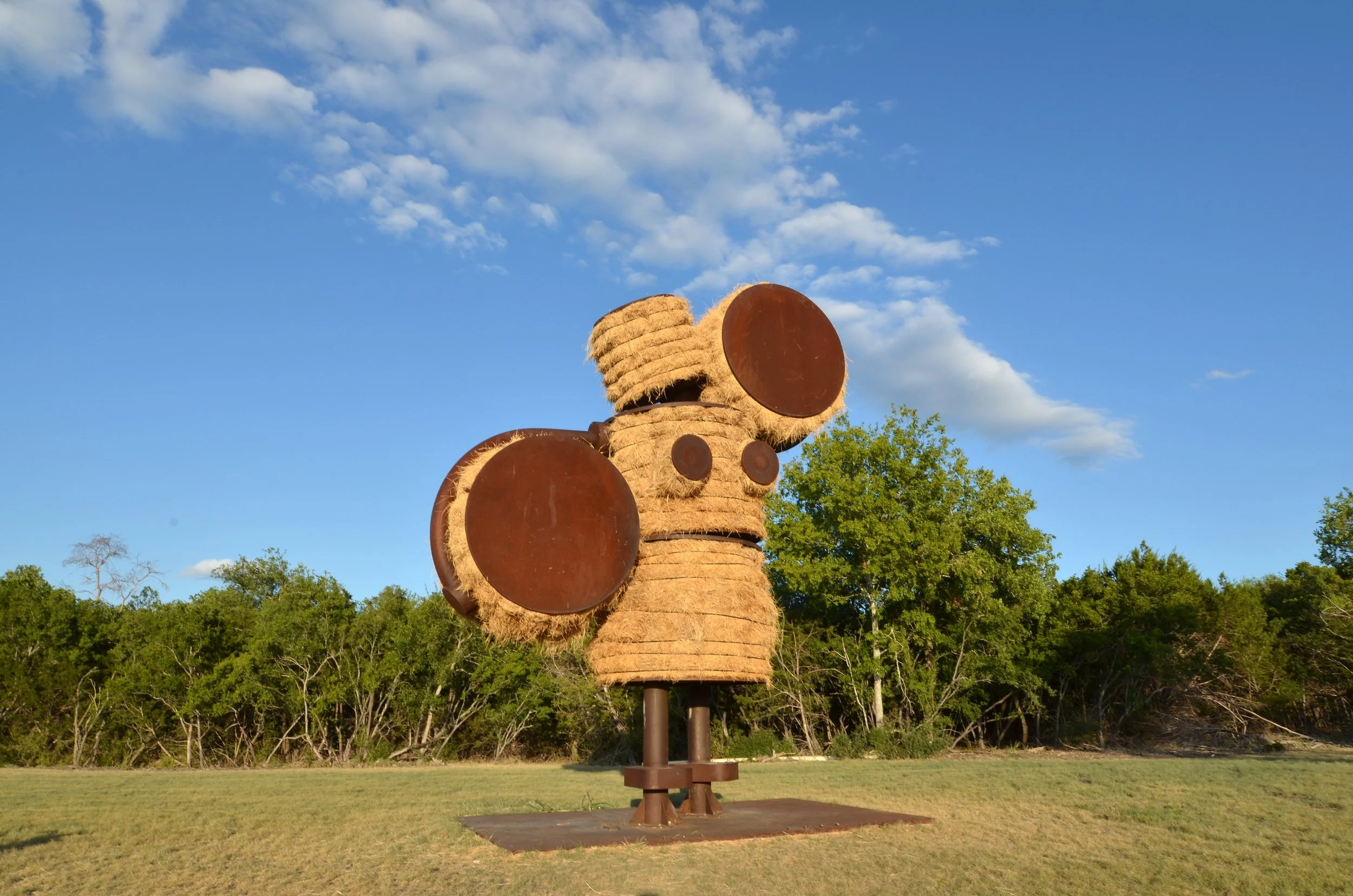
Conservation and Environmental Impact of Art in the Park
Makin’ Hay is more than an artistic display—it also plays a role in conservation and ecological awareness.
During the reinstallation process, excavation beneath Hay Roller revealed a small cave opening. Work was paused until environmental consultants confirmed that it was not a habitat for endangered karst invertebrates.
The installation process also highlighted the park’s three distinct ecoregions: limestone soil under Hay Roller and black gumbo soil beneath Woman Carrying Hay.
Additionally, the Conservancy is exploring options to use native hay in future installations to enhance ecological sustainability further.
Wildlife interactions with the sculptures remain a topic of study:
Will deer graze on the hay?
Will birds use it for nesting material?
Yellow jacket wasps have nested in the hay in the past, the natural predators in the park, such as Northern Cardinals, Titmice, skunks, and raccoons, may help control the wasp populations.
Fun fact:
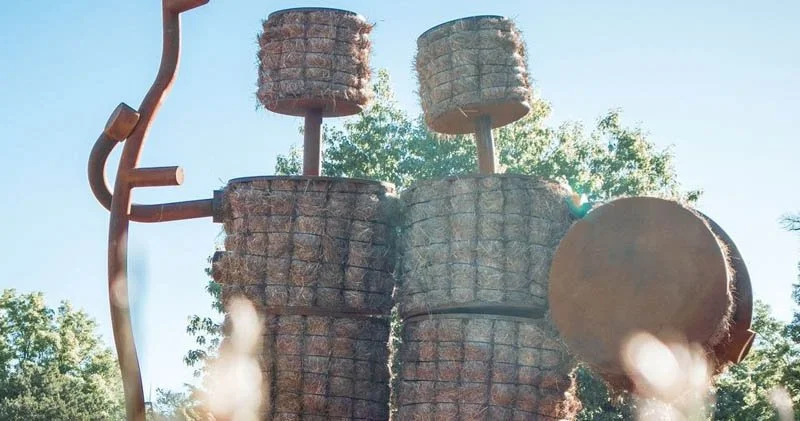
The Shockers, Wichita State University
A similar installation, The Shockers, can be found at Wichita State University!
As these beloved figures return to Phil Hardberger Park, they serve as a reminder of the park’s dedication to art, conservation, and history—inviting visitors to engage with both the past and the present in a truly unique way.